
Is ear discharge dangerous and how to manage ear discharge

Ear discharge is not an uncommon phenomenon, as it can occur in individuals of all ages. Many people worry whether purulent ear discharge is dangerous. Ear discharge is a warning sign of an ear infection that should not be overlooked, because without early treatment, it can lead to severe complications affecting general health and hearing function. What is ear discharge? What are the recognizable signs? What are the causes and how should ear discharge be managed? Join Sante Hospital let's explore the article right below.
1. What is purulent ear discharge?
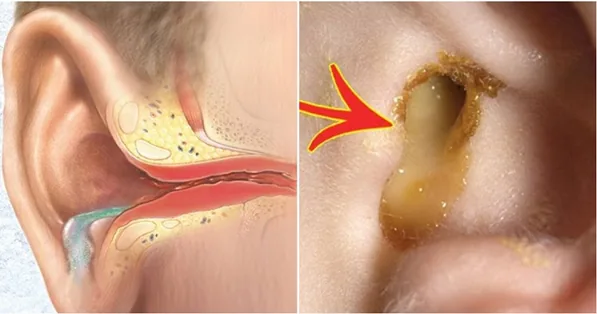
Purulent ear discharge is the drainage of fluid—which may contain serous fluid, blood, or pus—accompanied by a foul odor from inside the ear. This condition is accompanied by several symptoms, such as:
- Ear pain with varying degrees of severity and frequency in each patient.
- Tinnitus.
- Hearing ability is impaired, with some individuals even experiencing complete hearing loss.
When there is discharge from the ear canal, or if the canal remains persistently wet and foul-smelling. Adults can readily self-detect physical abnormalities, particularly in the sensitive sensory regions of the face.
In young children, the initial symptoms of otitis media are very subtle because the child is not yet able to articulate them verbally. Therefore, parents need to pay close attention to abnormalities in the child's presentation through expressions of discomfort and “unusual” behaviors:
- Fussiness, irritability, loss of interest in play, and restless sleep
- Frequently bringing hands to the ear area, scratching, pulling, or grasping the auricle
- Presence of warmth or fever
Discharge from the ear canal opening (commonly seen when an abscess perforates the eardrum and drains into the ear canal. At this point, the child no longer has a fever and is no longer in much discomfort).
Ear infections in children are not uncommon; however, if neglected without proper medical evaluation to definitively treat the underlying cause, the risk of non-healing, chronic progression, or recurrence can impair the child's hearing, leading to delayed language and communication development. More dangerously, the disease can lead to intracranial complications that are life-threatening.
Read more: Premier Orthopedic and Traumatology Care in Ho Chi Minh City
2. Underlying Causes of Ear Discharge (Otorrhea)
The auricle and external auditory canal form the outermost portion of the auditory system, exposed to the ambient environment and naturally sealed at its depth by the tympanic membrane. Consequently, this region possesses an innate, resilient barrier engineered to repel and eliminate external intruders such as dust and bacteria. The delicate hairs lining the canal opening and natural cerumen (earwax) constitute this sophisticated biological defense mechanism.
In a healthy state, the ear canal remains dry and well-ventilated; any visible discharge should be regarded as an atypical clinical sign. This fluid may originate directly within the external auditory canal itself or stem from deeper structures—wherein the canal merely serves as an egress path when the eardrum is perforated. Common etiologies include:
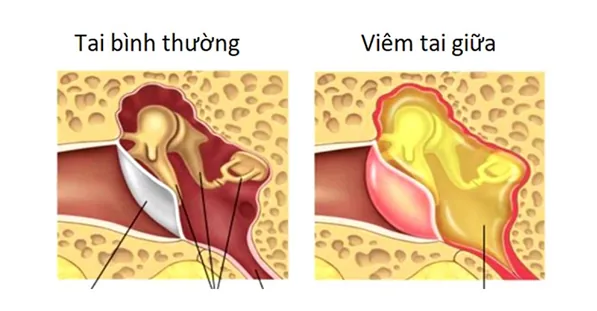
- Middle ear infection: Also known as acute or chronic otitis media. These infections often ascend from the nose and throat through the Eustachian tube, which is the passage from the nose to the ear, and the causative agents are usually viruses or bacteria. Therefore, whenever one has a cold, rhinitis, or pharyngitis, there is often a sensation that the ear also has 'issues' such as tinnitus, ear pain, or hearing loss. If the infection spreads to the middle ear, accumulates pus, and perforates the eardrum, the fluid will drain out through the ear canal. If the infection does not stop at the middle ear but spreads to the mastoid area, the condition becomes quite severe and is referred to as 'mastoiditis.' At this stage, hearing will be 'devastated,' potentially leading to life-threatening intracranial infectious complications.
- Aural trauma may cause abrasions or lacerations to the canal epithelium, or more critically, temporal bone fractures leading to cerebrospinal fluid (CSF) otorrhea. Depending on the clinical stage, symptoms may present as active hemorrhage, clear serous fluid leakage, or purulent drainage secondary to infection. Any direct anatomical communication between the ear and the cranial cavity represents a critical emergency, posing immediate life-threatening risks of ascending intracranial infection.
- Otitis externa involves inflammation of the dermatological lining of the external auditory canal, occurring when pathogenic agents breach the protective barrier to invade cutaneous tissues. Causative factors predominantly include bacteria and fungi. Proliferation is often favored by water retention in the canal, impacted cerumen, or the excessive stripping of protective earwax through overzealous hygiene. It is important to note that frequent or habitual ear cleaning—particularly with non-sterile instruments—can be remarkably detrimental to canal integrity.
Read more: Where to get a reputable general check-up in Binh Thanh district.
3. Is Ear Discharge Serious, and How Is It Clinically Managed?
3.1. Clinical Risk Assessment of Ear Discharge
The auricle and external canal constitute the outermost structures of the auditory apparatus, directly exposed to the external environment and securely bounded internally by the tympanic membrane. These structures are shielded against pathogenic intrusion by a natural protective barrier comprised of physiological cerumen and fine hairs lining the entrance.
Under physiological conditions, the ear canal remains clean, dry, and well-aerated. Consequently, the emergence of purulent drainage should be considered an abnormal clinical finding. This discharge may originate from localized pathology within the external canal or arise from deeper structures, using the canal simply as an exit pathway. Any atypical secretion warrants careful evaluation for underlying lesions affecting the external, middle, or inner ear.
Purulent ear discharge (otorrhea) is typically indicative of bacterial activity and serves as a clinical sign of various underlying conditions. In pediatric patients, it is most frequently associated with acute or chronic otitis media. Less commonly, it may stem from suppurative otitis externa or a localized furuncle within the external auditory canal:
– Middle ear infection (Otitis media)
Acute or chronic otitis media represents an infectious inflammation of the middle ear, typically triggered by bacteria or viruses that ascend from the nasopharynx via the Eustachian tube. Because the ear, nose, and throat share continuous anatomical pathways, upper respiratory conditions such as rhinosinusitis, influenza, or pharyngitis frequently predispose patients to otologic symptoms, including conductive hearing impairment, otalgia (ear pain), and tinnitus.
When the infection spreads to the middle ear and purulent fluid accumulates, the tympanic membrane becomes distended and inflamed from the purulent effusion, posing a risk of perforation or rupture. If the inflammation extends beyond the middle ear into the mastoid process, it can lead to numerous severe complications.
Otitis media spreading to the mastoid bone is referred to as mastoiditis. When this condition occurs, hearing will be affected, and it can even cause life-threatening intracranial infectious complications.
– Ear trauma
If ear trauma results in abrasions, laceration of the ear canal skin, petrous temporal bone fracture, or more critically, cerebrospinal fluid otorrhea, it is extremely dangerous. Depending on the severity of the trauma, the patient may experience bleeding, serous fluid, or purulent discharge from the external ear. In particular, when the trauma causes an infection that spreads into the cranium, it becomes life-threatening.
– Otitis externa
This is an inflammation of the skin in the external ear canal caused by fungi and bacteria invading and breaching the ear canal's protective barrier. This condition is commonly seen in frequent swimmers. Additionally, long-term earwax buildup or excessive cleaning that completely removes earwax can also cause the condition. The presence and activity of these pathogens lead to infection and pus formation in the ear canal.
– Other clinical etiologies
In addition to the common causes mentioned above, foreign bodies lodged in the ear—such as insects, food particles, cotton gauze, etc.—can also cause purulent ear discharge. The severity varies depending on the extent of impaction and the trapped object.
3.2. Management of ear discharge
Thus, it can be seen that there are numerous causes of purulent ear discharge (otorrhea). Most of us cannot independently determine the etiology or assess the severity of the condition. To know whether ear discharge is dangerous, a medical examination and specific consultation with a physician are required.
To achieve the best outcome and prevent dangerous complications, the treatment of purulent ear discharge must be based on the underlying cause. Because causative agents differ, the treatment approach also varies for each patient.
Through clinical examination and diagnosis, the physician will establish a tailored treatment regimen for each specific case, such as: analgesics, antibiotic therapy, purulent drainage, etc. Patients should adhere to the physician's treatment instructions for a prompt recovery.
In cases of ear trauma, most can heal on their own. If the trauma causes a perforated eardrum with pus due to infection, a doctor must prescribe medication, a graft, or surgery. Patients need to attend follow-up visits as scheduled by their doctor to evaluate the treatment effectiveness.

4. Preventive measures against ear discharge
To avoid worrying about whether ear discharge is dangerous, it is best for each of us to take preventive measures by:
- Maintain good personal hygiene and limit contact with individuals suffering from respiratory illnesses.
- Do not insert any objects into the ear, as this can inadvertently cause injury to the tympanic membrane and the skin lining the ear canal.
- Avoid forceful impacts that can rupture the eardrum, such as hard slaps to the ear or forceful kissing on the ear with the mouth.
- Frequent swimmers should ideally use earplugs and tilt their head to one side after swimming to allow the ears to dry naturally.
If you are experiencing ear discharge and have concerns regarding potential risks, we advise consulting an ENT specialist promptly for a thorough evaluation and definitive diagnosis. Should treatment be prescribed, strict compliance with the recommended therapeutic regimen is crucial to achieving a full recovery and preventing serious secondary complications.
Read more: Best orthopedic trauma hospital in HCMC
5. Best Pediatric ENT Clinics in HCMC
Sante Hospital is a leading specialized hospital in Ho Chi Minh City located at: 11A Dinh Bo Linh, Ward 24, Binh Thanh District, Ho Chi Minh City. Sante is an international-standard hospital with infrastructure designed and built according to 4-star standards. With a dedicated and highly experienced medical team, Sante always prioritizes the health of its clients, which serves as the guiding principle for all of Sante's operations. Sante committed to quality, safety, effectiveness, and reasonable costs.. Parents can have peace of mind bringing their children for ENT examinations here. The hospital features ENT clinical specialties such as: Rhinology and Sinus Department, Otoneurology Department, as well as General Pediatrics Department to serve the examination of pediatric ENT conditions.
As a premier general hospital featuring modern, state-of-the-art facilities, our center is equipped with advanced diagnostic technologies to support patient care, including clinical audiometers, multi-slice CT scanners, comprehensive ENT video endoscopy (ear, sinus, and larynx), and electrocardiogram (ECG) systems.
Furthermore, the hospital brings together leading Otorhinolaryngology (ENT) specialists and physicians possessing high clinical expertise and extensive medical experience. In order to meet healthcare demands, Sante Hospital has established a diverse range of specialties including:
- General Surgery
- Cosmetic Surgery – Dermatology
- Orthopedics Department
- Internal Medicine
- Department of Odonto-Stomatology
- Otorhinolaryngology (ENT) Department
- Ophthalmology
- PEDIATRICS
- Laboratory Department
- Imaging Diagnostics
- Emergency Care
6. Sante Hospital Information
Address : 11A Dinh Bo Linh, Ward 24, Binh Thanh District, Ho Chi Minh City
Email: [email protected]
Hotline: (+84) 28 2200 8686
Proactively protect your health with our experienced specialist doctors and advanced medical equipment.
📞 BOOK AN APPOINTMENT NOW: (+84) 28 2200 8686 – (+84) 901 295 399
⏰ Monday – Saturday: Morning 7:30 AM – 12:00 PM, Afternoon 1:30 PM – 5:00 PM | 24/7 Emergency: ((+84) 937 389 539)
💳 Full nationwide health insurance coverage & Direct billing for private insurance accepted