
KNEE REPLACEMENT SURGERY:
ESSENTIAL INSIGHTS AND COMPREHENSIVE GUIDE


The knee joint consists of 3 main bony components: Distal end of the femur, proximal end of the tibia, patella. Knee replacement surgery resurfaces the articular surfaces of : Distal end of the femur, proximal end of the tibia, patella with artificial prosthetic materials.
1. Indications for knee replacement
Knee surgery is typically considered when:
- Severe knee pain that impairs daily living activities and is refractory to conservative interventions (such as pharmacotherapy or physical therapy).
- Knee joint deformity.
- Functional impairment (e.g., difficulty walking, climbing stairs, or prolonged standing).
2. Types of knee joint surgery
Total knee arthroplasty (TKA):
- The most widely performed type of knee replacement surgery.
- Replaces the articular surfaces of both the distal femur and proximal tibia, and occasionally the patella, using specialized medical-grade metal and high-density plastic components.
Partial knee arthroplasty (PKA)
- Also referred to as unicompartmental knee replacement (partial knee replacement).
- Only the damaged compartment of the knee is replaced, typically indicated for patients whose osteoarthritis is isolated to a single compartment of the joint.
Complex or revision knee surgery:
- This procedure is indicated for patients who have previously undergone knee arthroplasty but require revision surgery due to clinical complications or prosthetic wear.
3. Surgical procedure
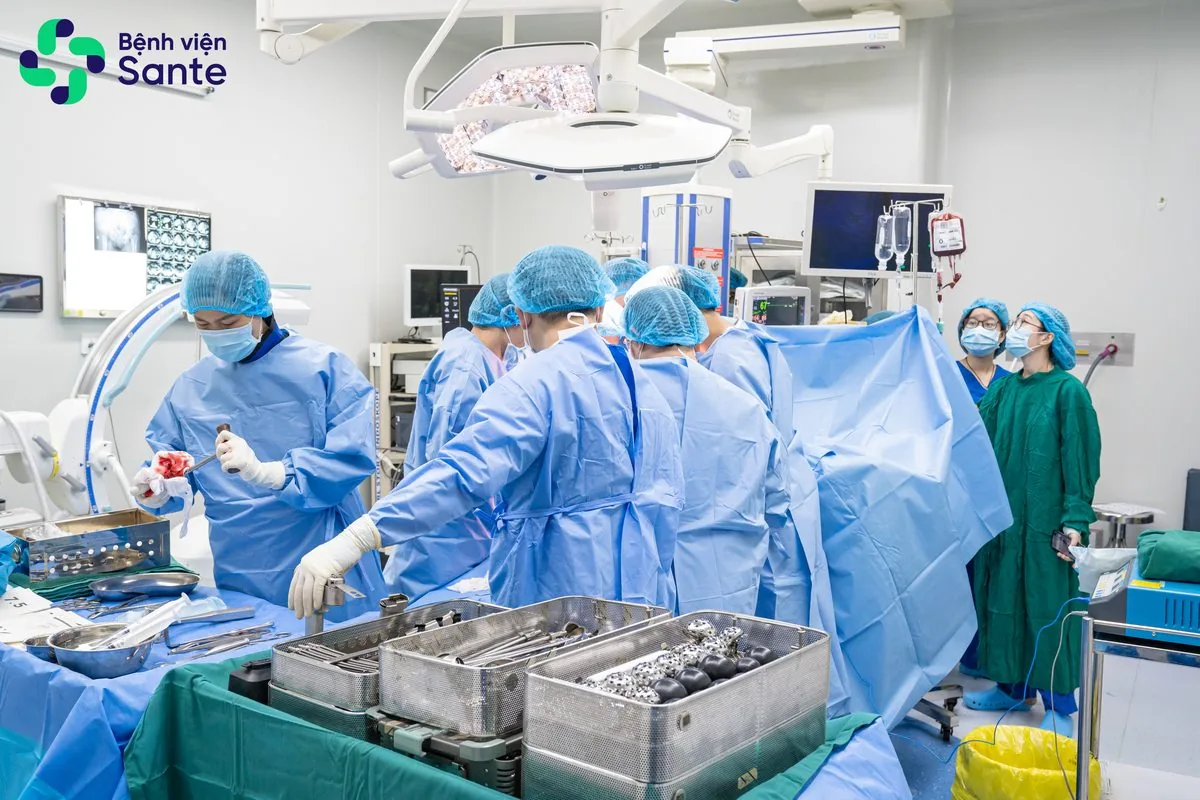
The patient is administered general anesthesia or regional anesthesia, and the surgeon makes an incision to access the knee joint.
- Resection: Damaged sections of the knee joint (predominantly diseased cartilage and bone) are precisely excised.
- Implantation: The prosthetic components are securely anchored into anatomical position. These components are fabricated from advanced metal alloys (such as cobalt-chromium) and ultra-high-molecular-weight polyethylene, engineered to replicate natural knee biomechanics.
- Incision closure: The surgical wound is meticulously closed with clinical sutures, and the knee is appropriately dressed and bandaged.
4. Recovery
Hospitalization: Typically, patients remain hospitalized for 1-3 days postoperatively.
Physical therapy: Early mobilization and rehabilitation are essential for recovery, typically beginning within 24 hours after surgery to regain mobility and strength.
5. Postoperative Care
Including pain management, wound care, and guidance on gradual weight-bearing on the operated leg as directed by the physician.
- Ambulation requires the support of crutches or a walking frame.
- Wear a stabilizing knee brace when standing and ambulating, such as the Orbe H2 functional knee orthosis.
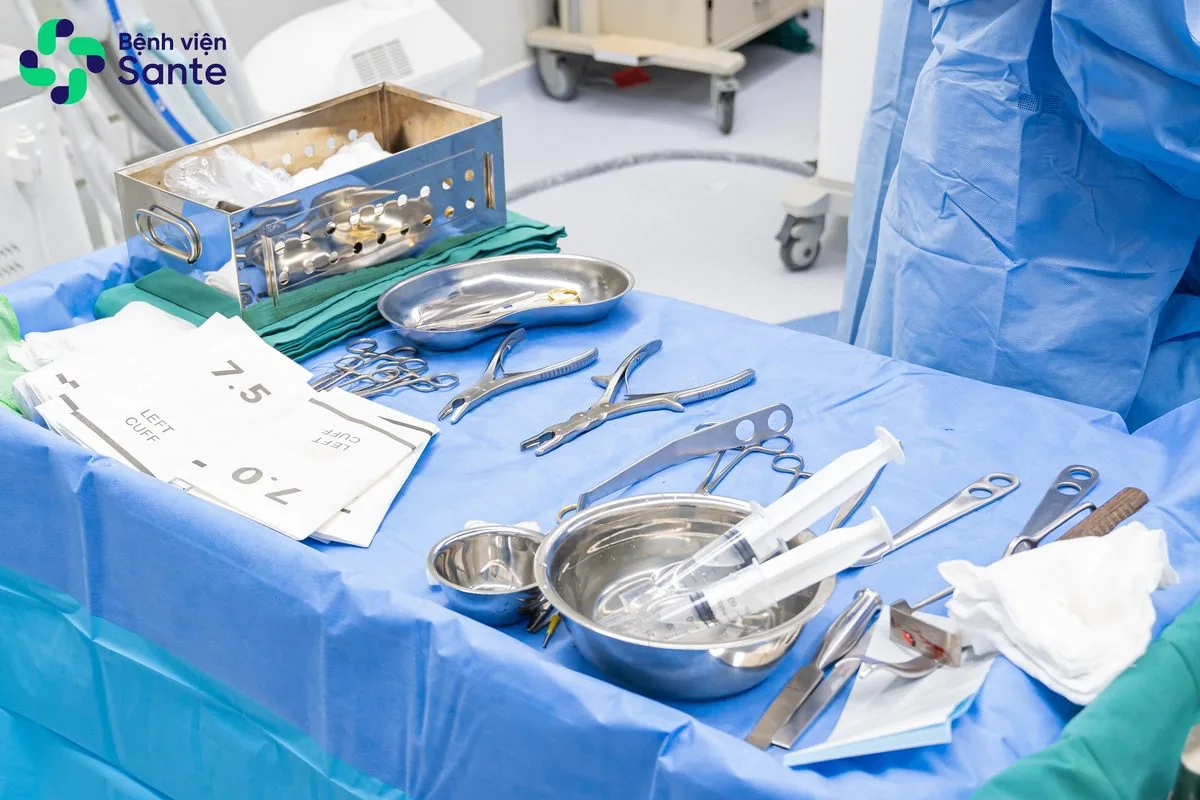
Department of Orthopedics & Traumatology, Sante Hospital specializing in the examination and treatment of musculoskeletal conditions, ligaments, cartilage, and surrounding soft tissues. Joint replacement surgery is routinely performed at Sante, with many patients recovering quickly and walking after 24h.
Contact us immediately for consultations and to book an appointment with leading specialists at Sante Hospital:
Address: 11A Dinh Bo Linh, Ward 24, Binh Thanh District, Ho Chi Minh City
Hotline: (+84) 28 2200 8686
Fanpage: www.facebook.com/benhviensante
Website: www.benhviensante.com
Proactively protect your health with our experienced specialist doctors and advanced medical equipment.
📞 BOOK AN APPOINTMENT NOW: (+84) 28 2200 8686 – (+84) 901 295 399
⏰ Monday – Saturday: Morning 7:30 AM – 12:00 PM, Afternoon 1:30 PM – 5:00 PM | 24/7 Emergency: ((+84) 937 389 539)
💳 Full nationwide health insurance coverage & Direct billing for private insurance accepted